
15 to 30 minutes · Easy to moderate · Updated November 2026
How to unclog a sink.
The complete guide from a professional plumber, for kitchen and bathroom sinks. Stopper, plunger, trap, hand auger, and a clear point where you stop and call a pro.
 By Andrew HendersonRed Seal Plumber
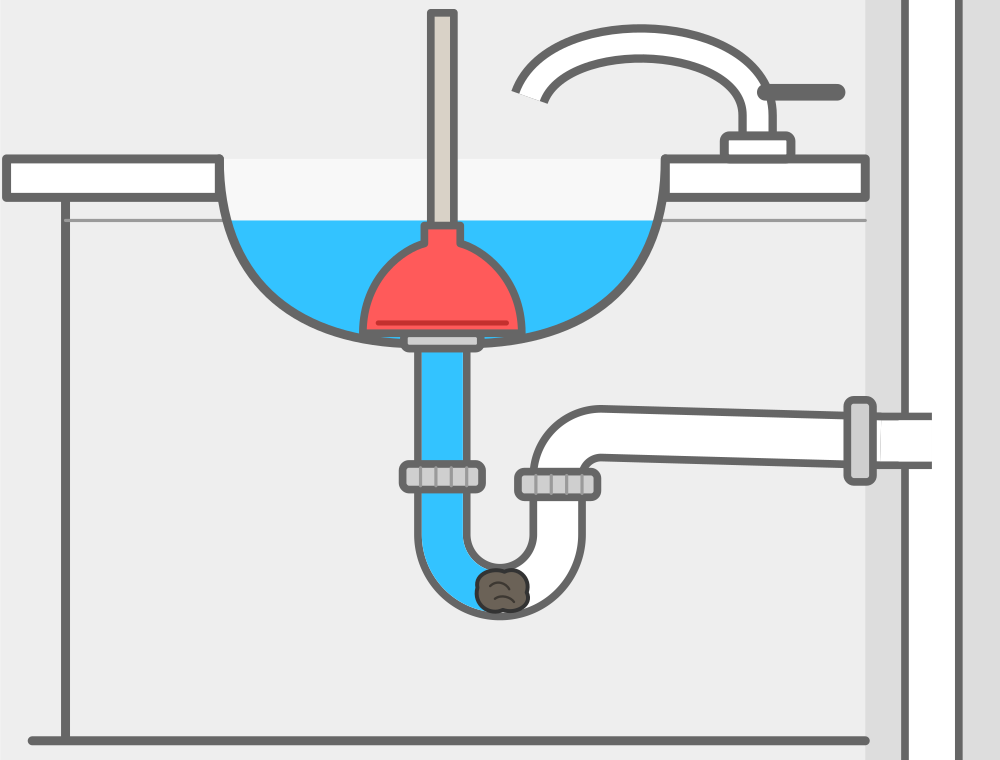
Before you touch it
1. Stop running water. That includes the dishwasher.
2. Poured in drain cleaner? Don't plunge and don't open the trap. Read this first.
3. Gloves and eye protection. This can be a messy job.
Steps 1 to 4
Get set up.
-

Step 1
Gear up
Put on gloves and eye protection. Have a bucket and a few old towels within reach.
Andrew's pro tip: What comes out of a kitchen trap is the worst smell in the house. Open a window first.
-
Step 2
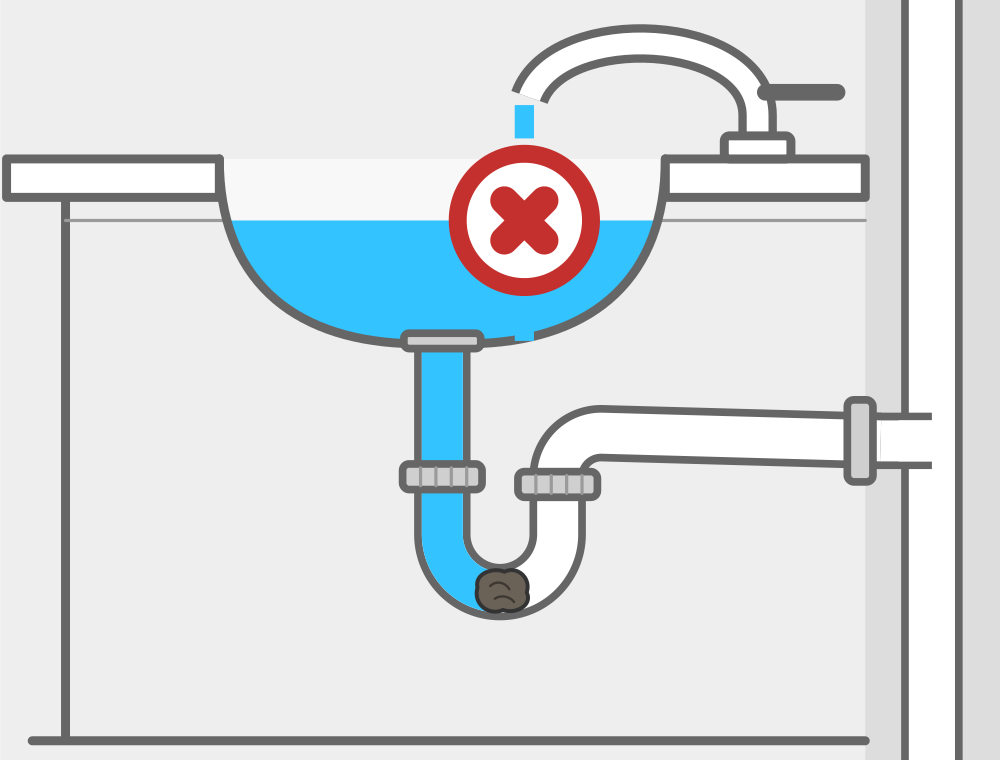
Stop the water
Turn the tap off and don't run the dishwasher. Every litre you add is one more to bail.
Andrew's pro tip: If the sink is filling and nobody is running water, it is coming from somewhere else. That is a main line or a shared line, not this sink.
-
Step 3
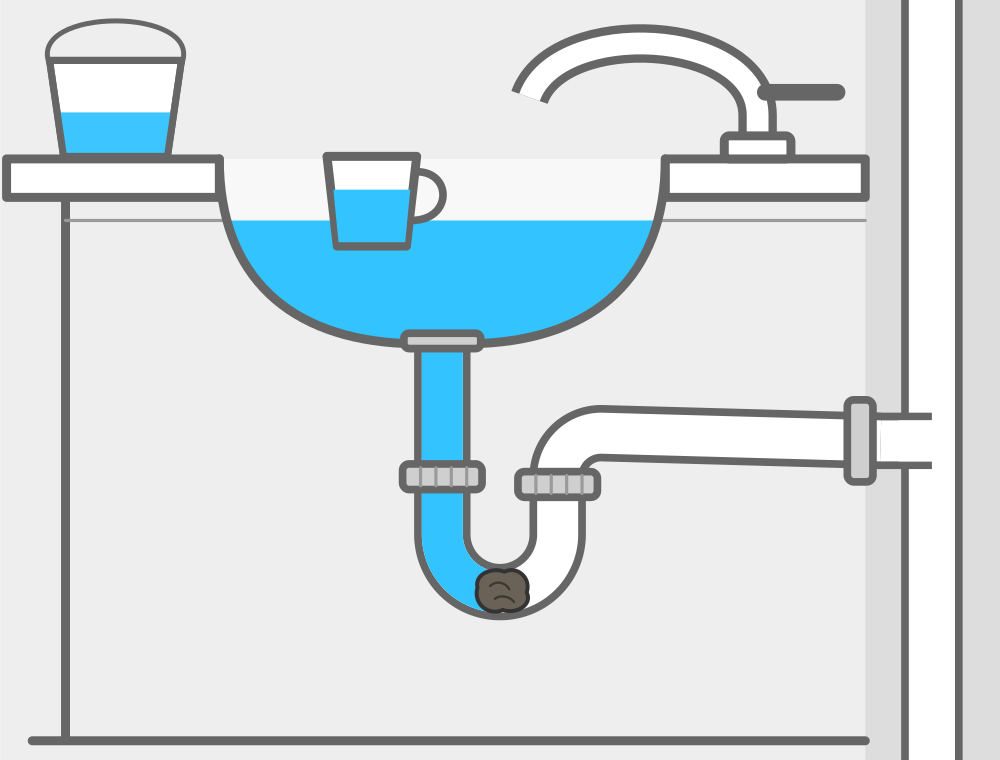
Bail the sink
Scoop the standing water into a bucket. Pour it down a toilet, not another sink.
Andrew's pro tip: Going to plunge? Leave enough water to cover the plunger cup.
-
Step 4
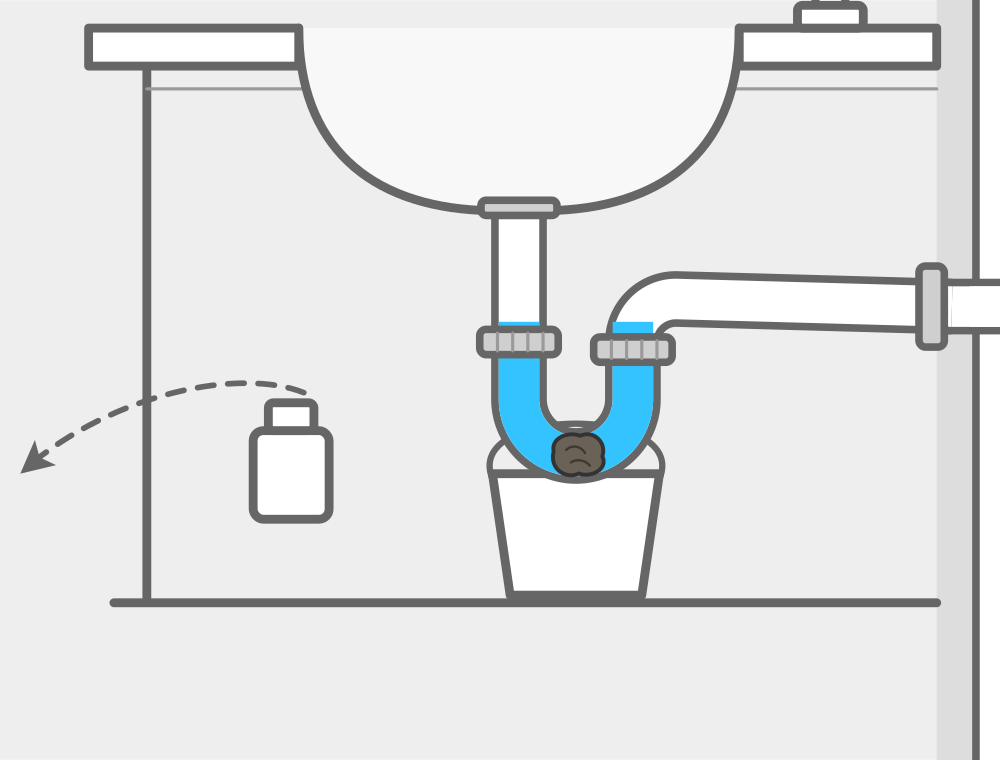
Clear the cupboard
Empty the cupboard under the sink and set a bucket under the bend in the pipe.
Andrew's pro tip: Look at the pipes while you're there. Wet, green or flaking means go gently.
Know your clog
Kitchen or bathroom?
They block for different reasons, in different places, so they start with different steps.
| Kitchen sink | Bathroom sink | |
|---|---|---|
| What blocks it | Grease, soap and food | Hair, soap and toothpaste |
| Where | Usually past the trap, in the pipe behind the wall | Usually on the stopper, in the first few inches |
| Start with | The plunger, then the trap | The stopper |
| More | Kitchen sink clogged | Bathroom sink clogged |
Steps 5 to 8
Work from the sink to the wall.
Each method reaches a little further than the last. Bathroom sinks start at the stopper. Kitchen sinks start at the plunger.
Step 5: clean the stopper
Bathroom sinks only. Most slow bathroom sinks are fixed right here.
-
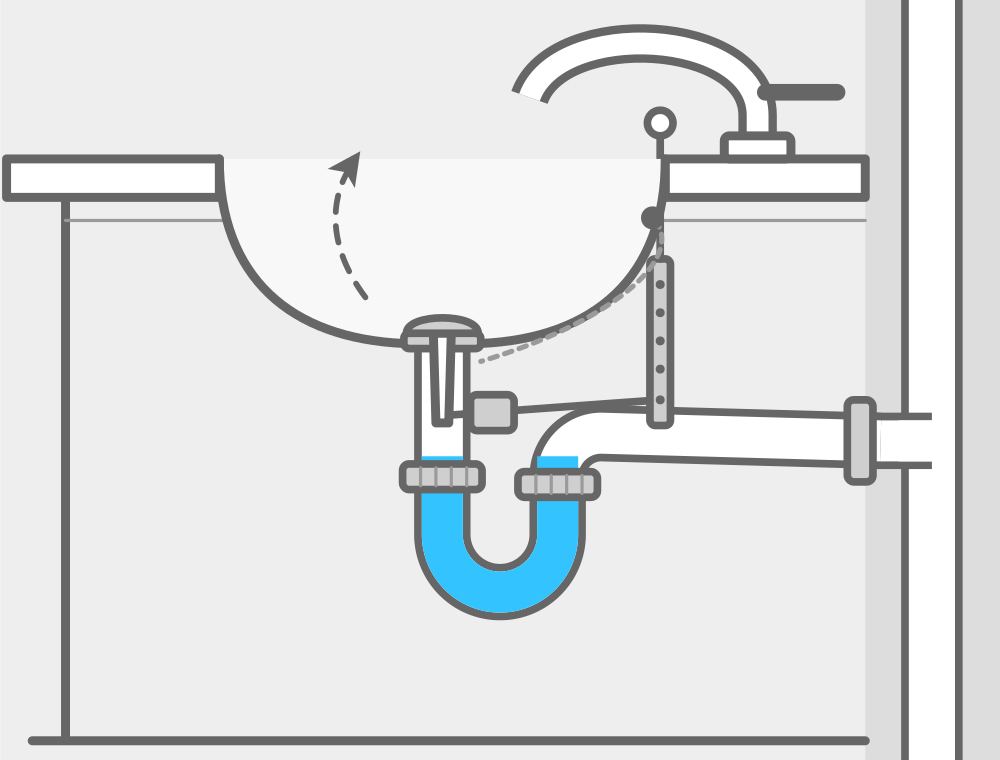
Stopper · 1 of 5
Try lifting the stopper out. Some lift straight up, and some unscrew with a quarter turn to the left.
-
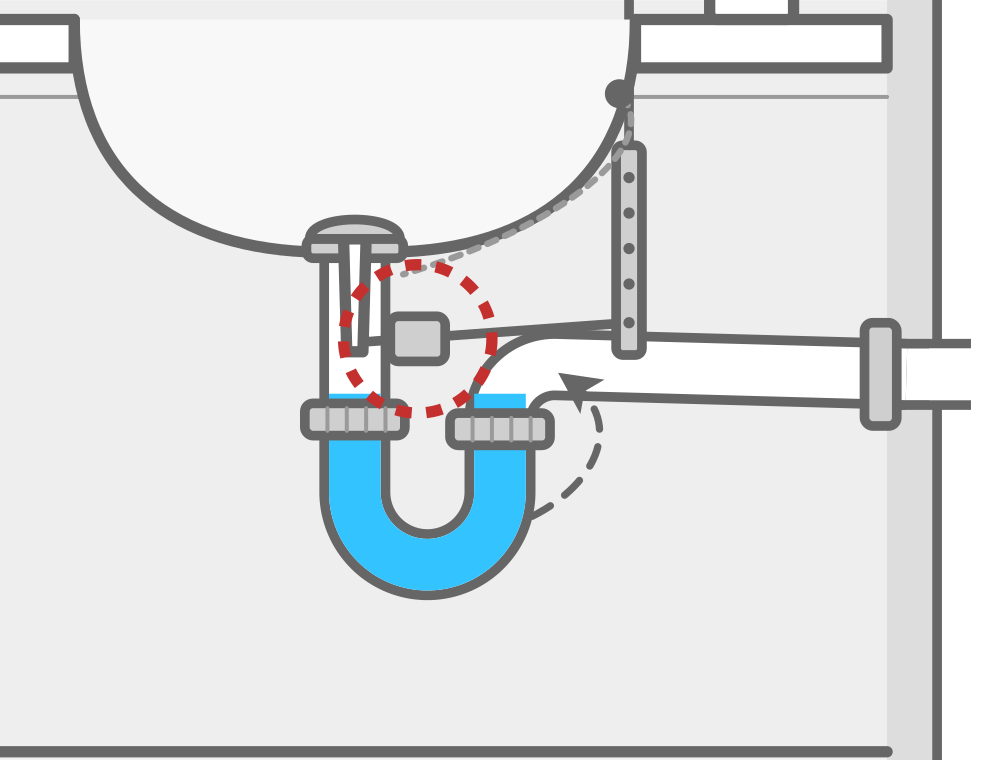
Stopper · 2 of 5
Won't come out? Under the sink, unscrew the small nut on the back of the drain pipe by hand and slide the rod back.
Andrew's pro tip: Put a towel under it. A little water will drip out when the rod moves.
-
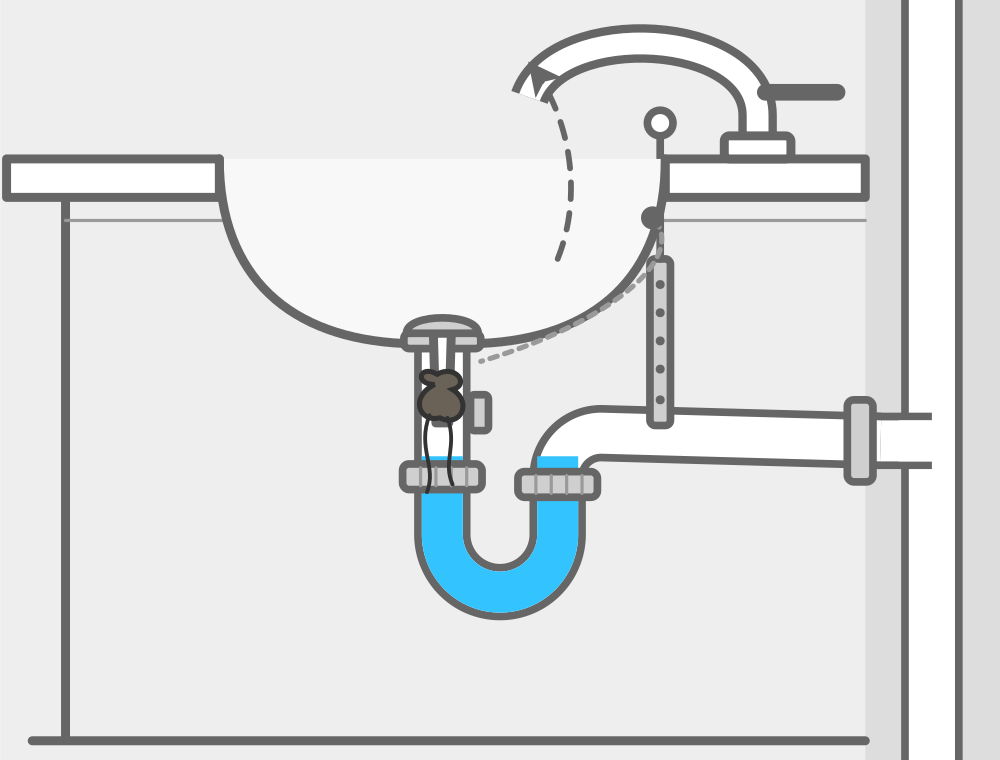
Stopper · 3 of 5
Lift the stopper out and pull the hair off it. Put it in the garbage.
-
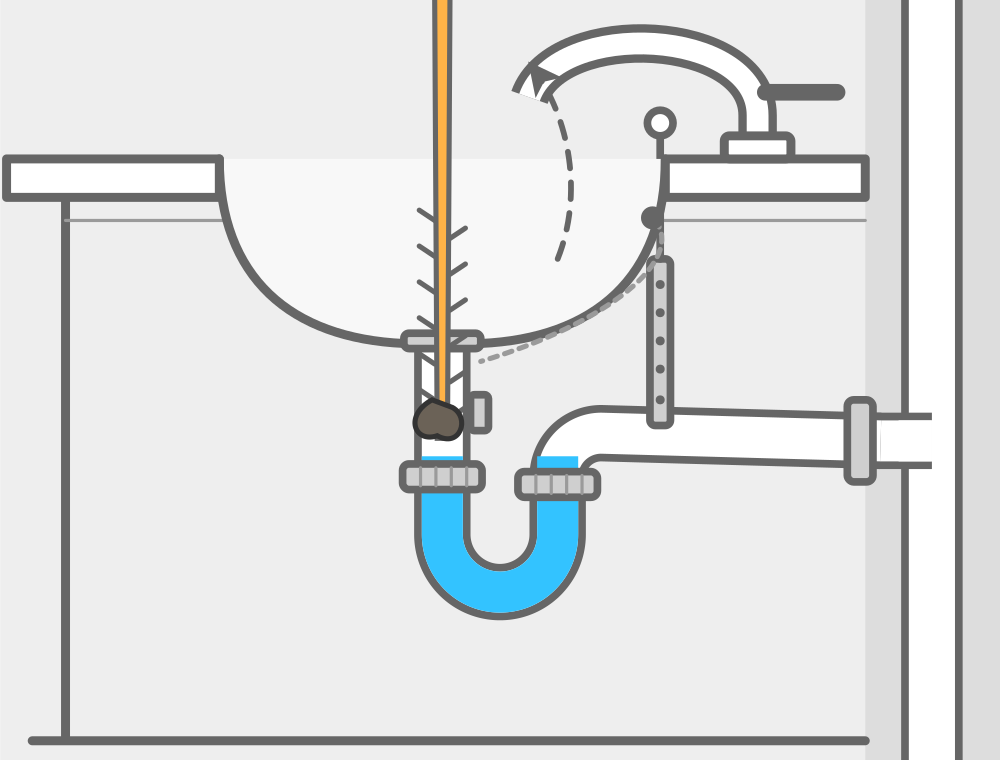
Stopper · 4 of 5
Push a barbed plastic drain strip down the drain, turn it and pull it up slowly. Repeat until it comes back clean.
Andrew's pro tip: They cost a few dollars at any hardware store, and one saves a call-out.
-
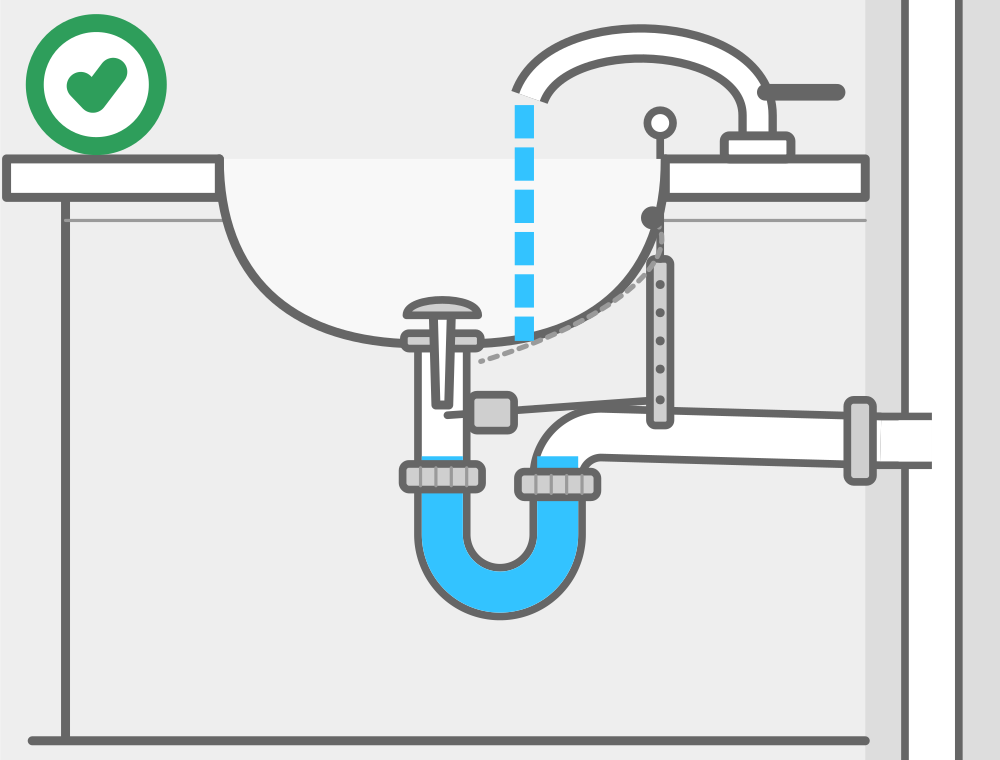
Stopper · 5 of 5
Drop the stopper back in with the hole in its stem facing the back. Slide the rod through, tighten the nut by hand and run the tap.
Step 6: use a plunger
A plunger only works if the water has nowhere else to go. Seal the other openings first.
-
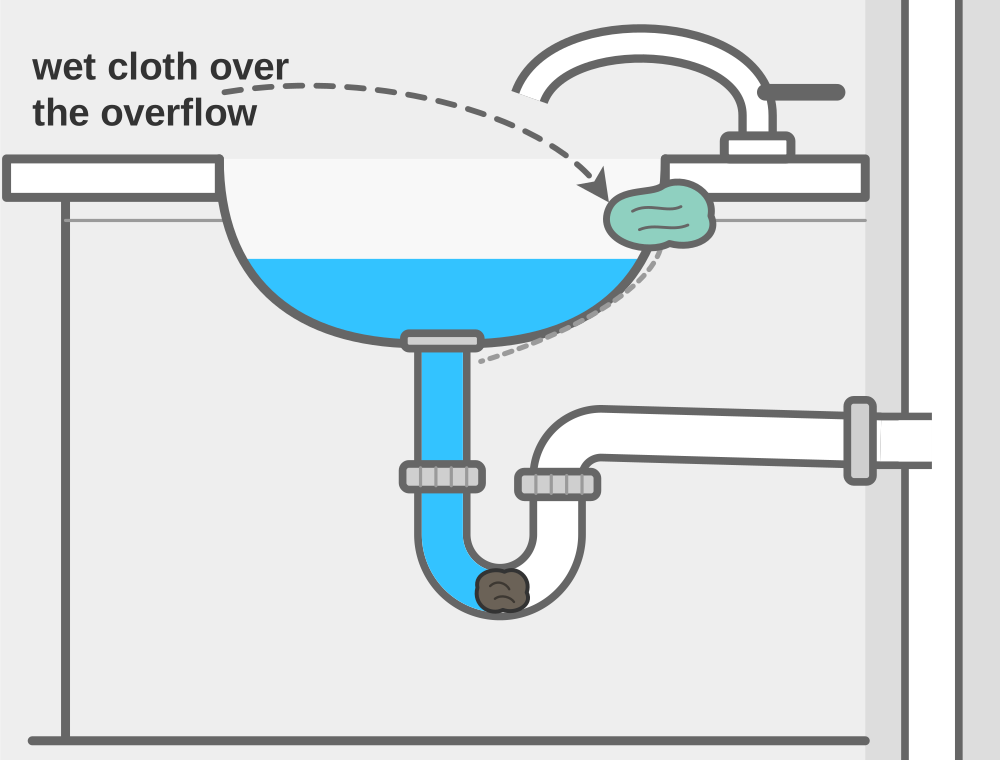
Plunger · 1 of 5
Block every other opening. On a bathroom sink, press a wet cloth over the overflow hole near the top of the bowl.
-
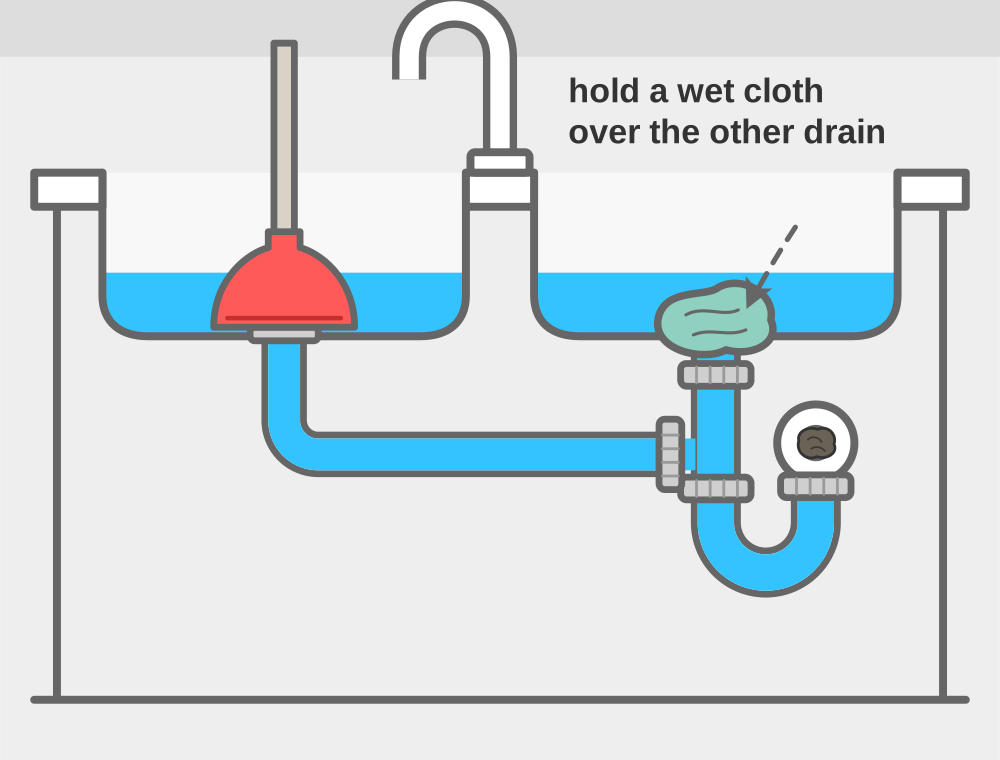
Plunger · 2 of 5
On a double kitchen sink, hold a wet cloth hard over the other drain.
Andrew's pro tip: Skip this and you are only pushing water from one bowl to the other.
-
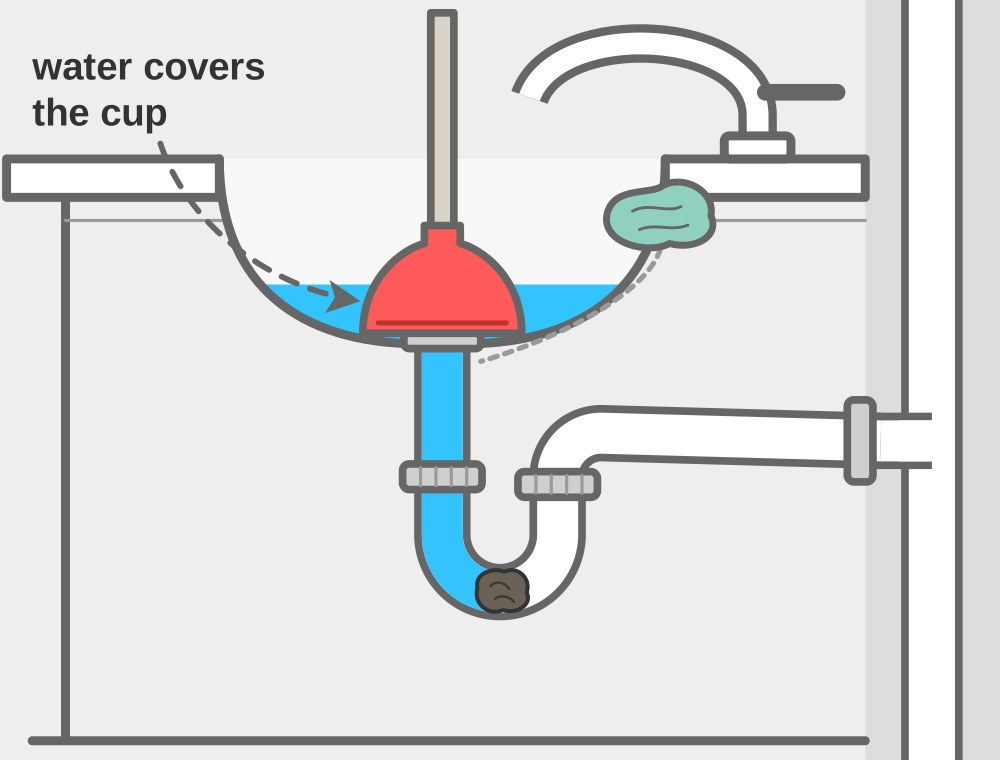
Plunger · 3 of 5
Set a flat cup plunger over the drain. You want enough water in the sink to cover the cup.
Andrew's pro tip: Use a flat cup plunger, not the toilet kind with the sleeve on the bottom. And not one that has been in a toilet.
-
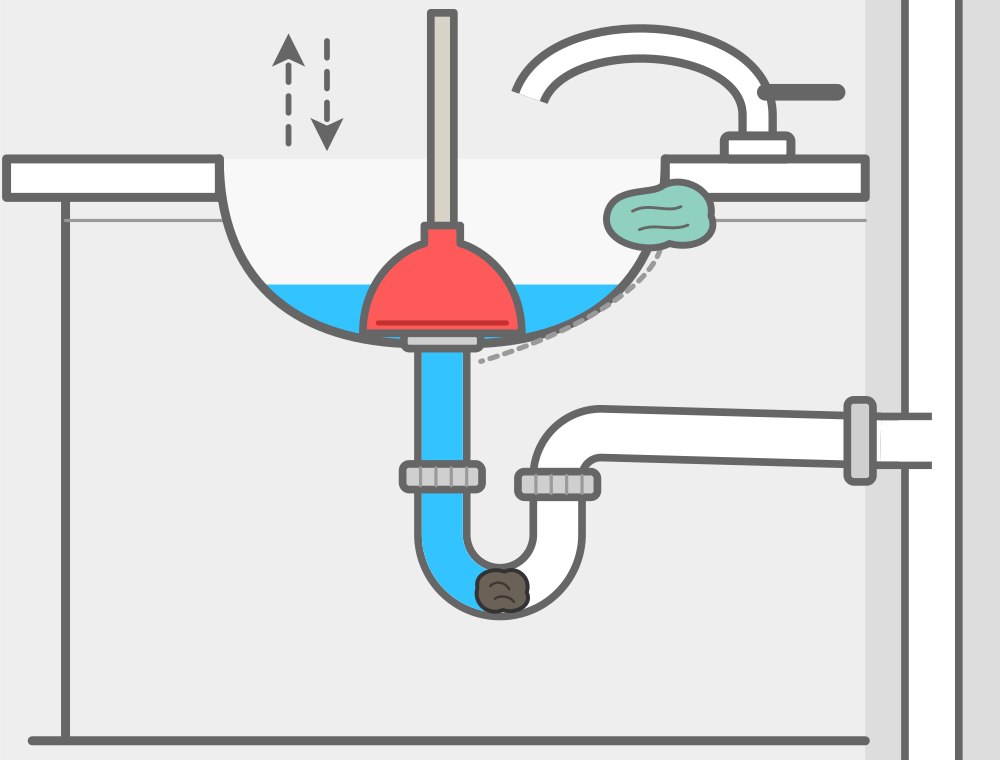
Plunger · 4 of 5
Push down and pull up in short, straight strokes for 15 to 20 seconds. Keep the seal. The pull does as much as the push.
-
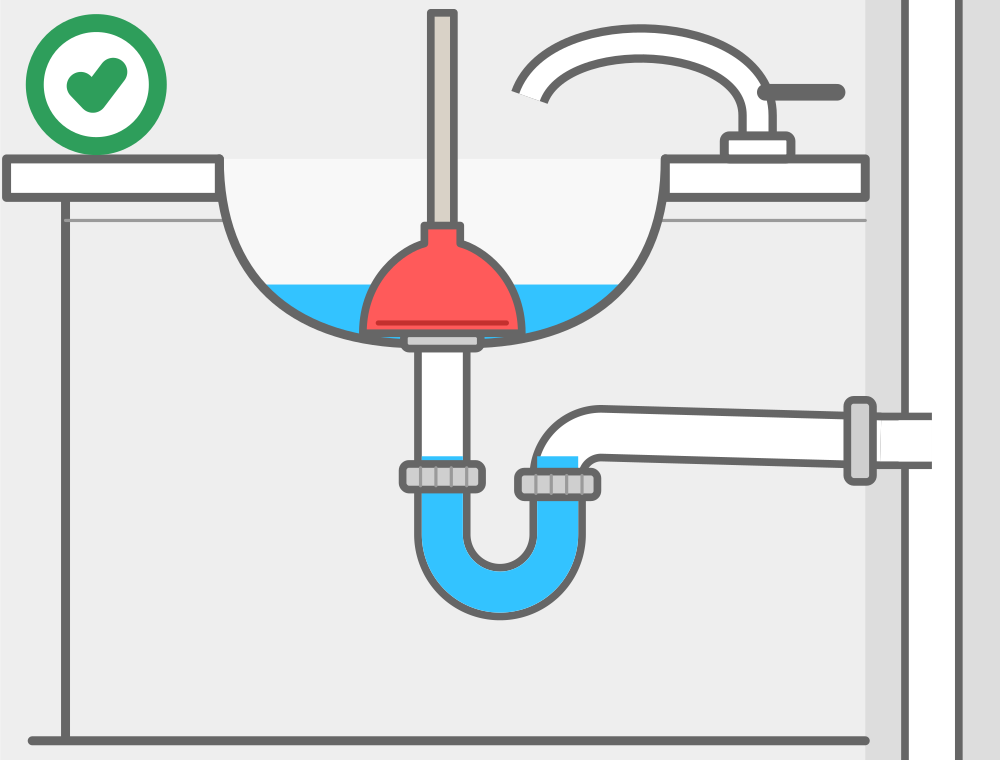
Plunger · 5 of 5
Pull the plunger away and see if the water drops. Try up to 3 rounds.
Andrew's pro tip: If nothing has changed after 3 rounds, more plunging won't do it. Go to the trap.
Step 7: clean the trap
The bend under the sink comes apart by hand, and it shows you where the clog is. Packed full means you found it. Clean means it is further along.
-
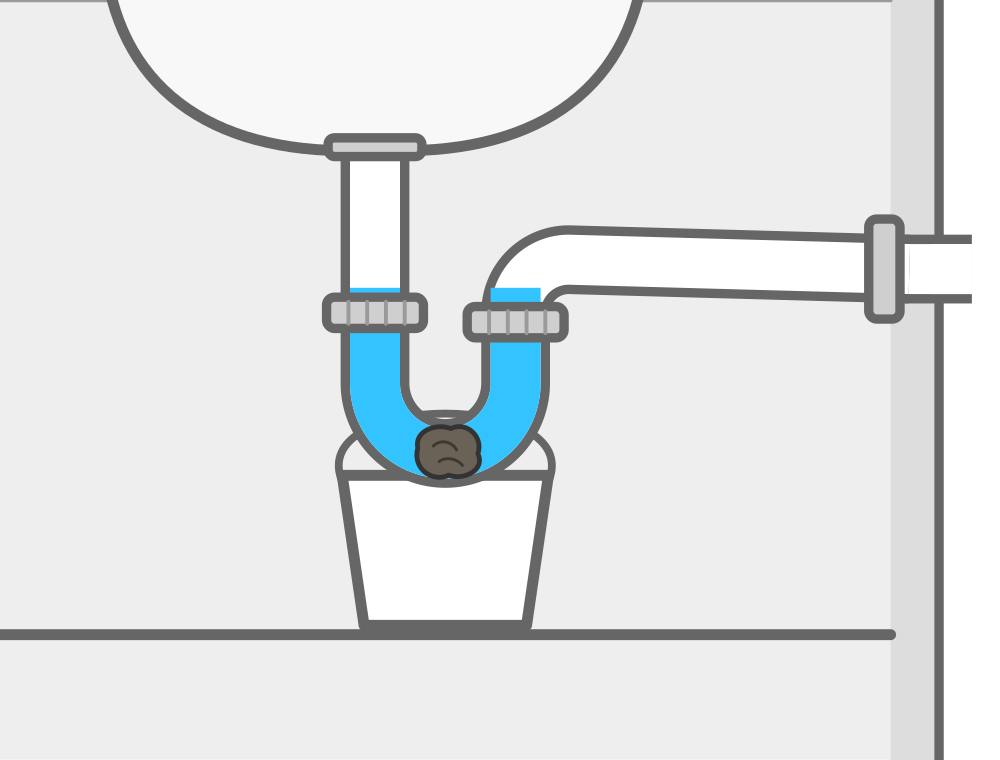
Trap · 1 of 5
Empty the cupboard and set a bucket right under the bend in the pipe.
-
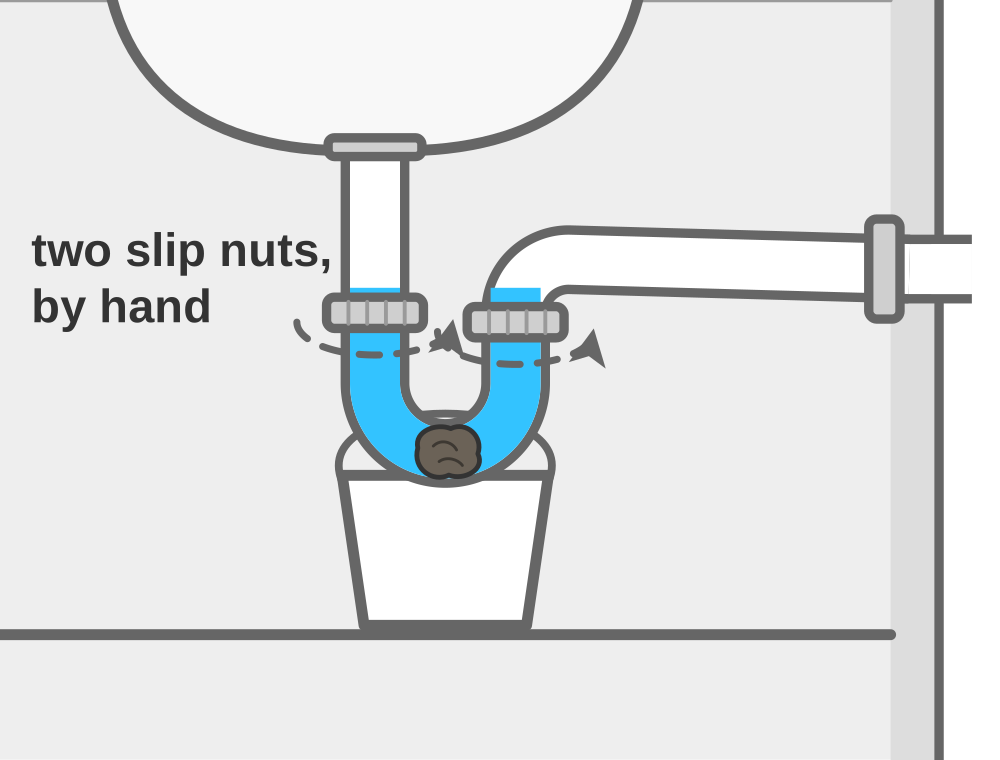
Trap · 2 of 5
Loosen the two slip nuts by hand, turning to the left. One is on the pipe from the sink, the other on the pipe to the wall.
Andrew's pro tip: Stuck? Wrap a rag around the nut and use pliers gently. If an old metal trap starts to crumble, stop.
-
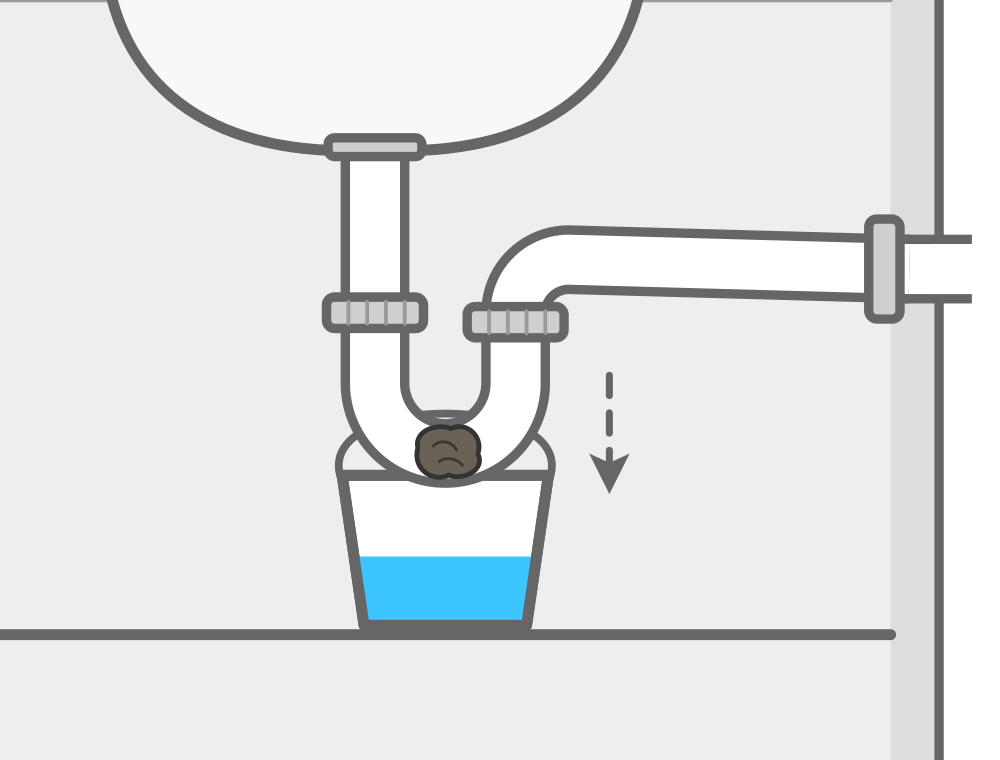
Trap · 3 of 5
Lower the bend and tip it into the bucket. If it is packed with sludge or something is wedged in it, that was your clog.
-
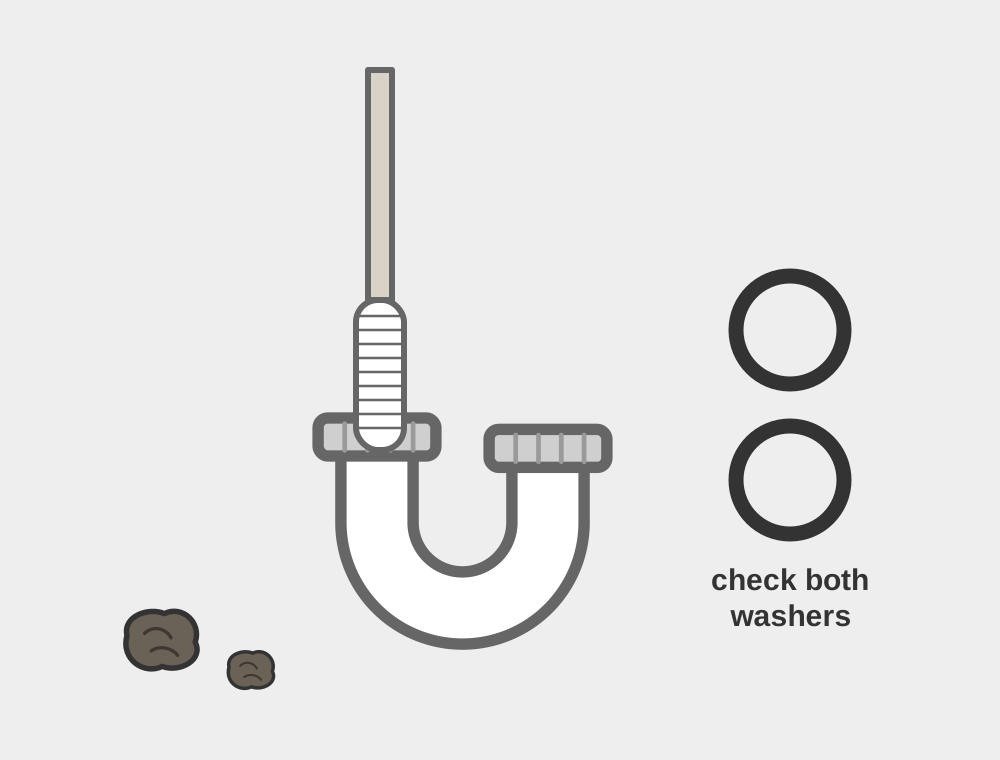
Trap · 4 of 5
Scrub the bend clean and check both washers. Replace any that are cracked or hard.
-
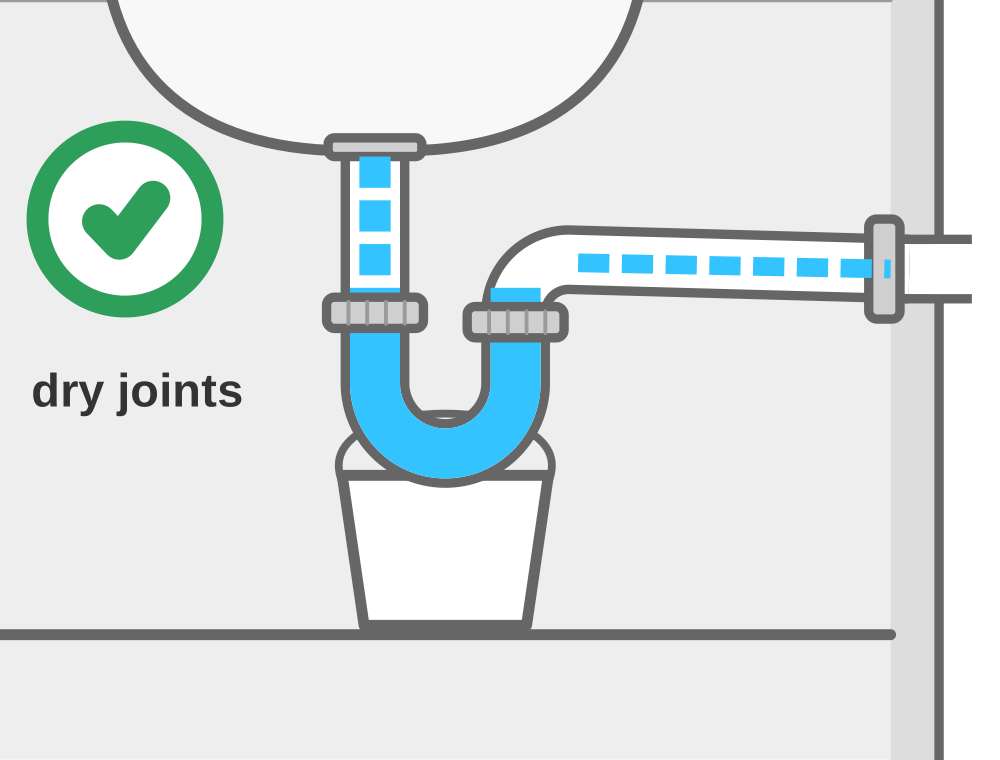
Trap · 5 of 5
Refit it with the bevelled side of each washer facing the joint. Tighten by hand, fill the sink, let it go and check the joints are dry.
Andrew's pro tip: Hand tight is right for plastic. A wrench cracks the nut.
Step 8: use a hand auger
If the trap was clean, the blockage is in the pipe that goes into the wall. A hand auger reaches a few metres into it.
-
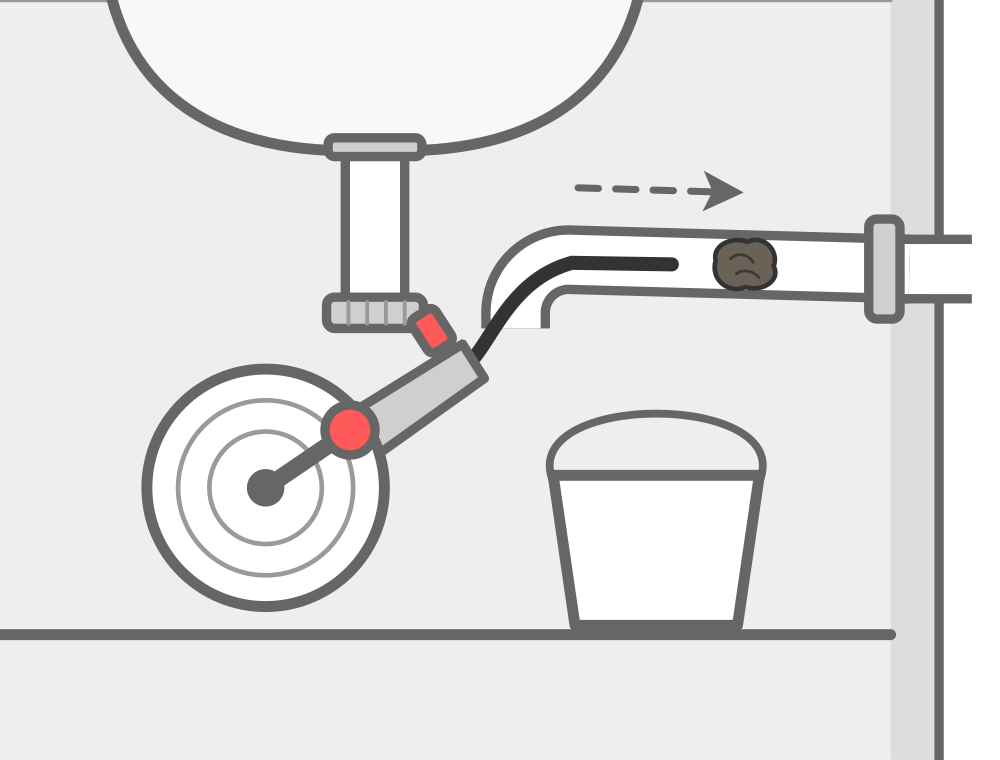
Hand auger · 1 of 5
With the trap off, loosen the thumbscrew and push the cable into the wall pipe until it stops.
Andrew's pro tip: Use a small drum auger with a 1/4-inch cable. A toilet auger is the wrong tool for a sink.
-
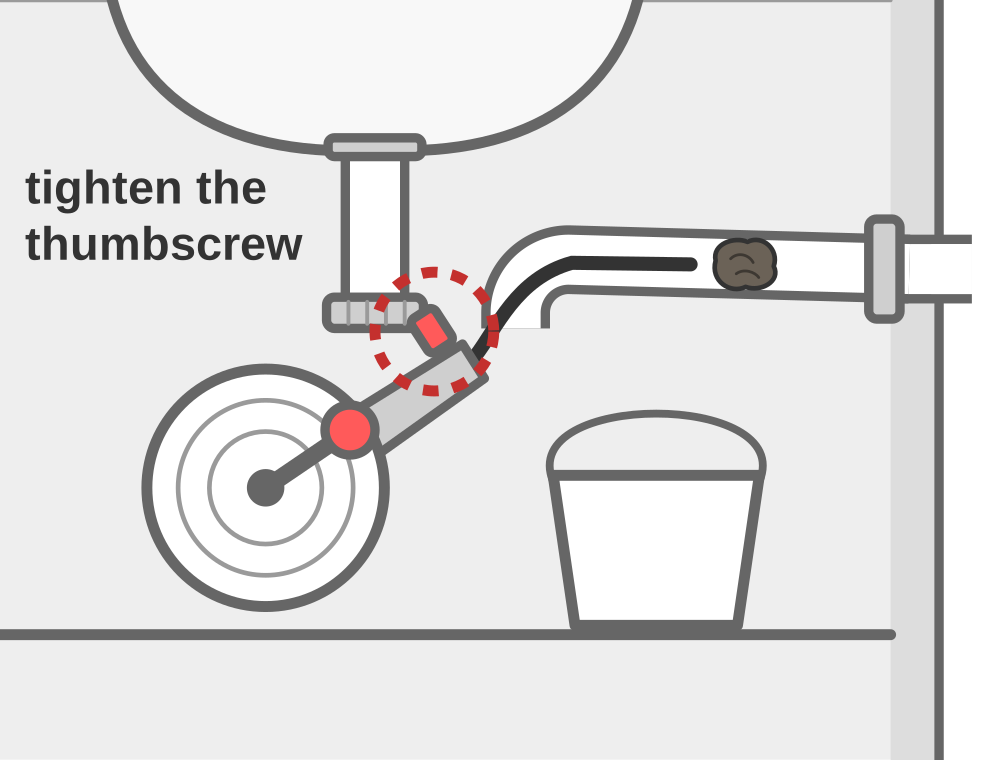
Hand auger · 2 of 5
Leave about 15 cm (6 inches) of cable showing and tighten the thumbscrew.
-
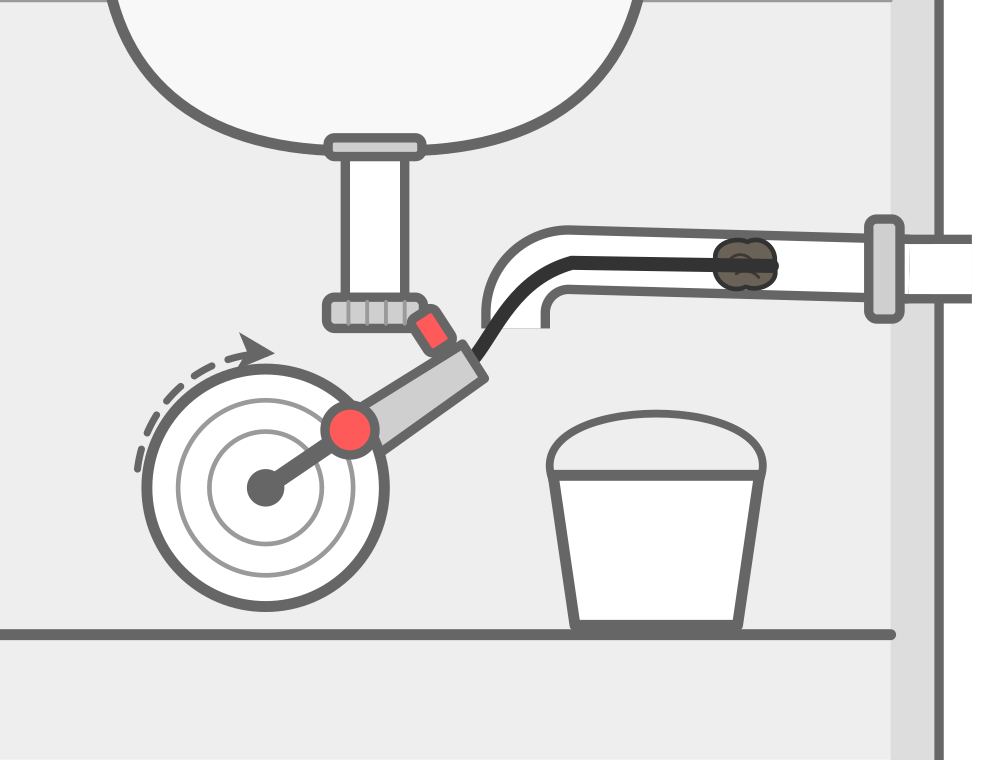
Hand auger · 3 of 5
Crank clockwise with steady, light pressure. When the cable moves ahead, loosen, feed more, lock and crank again.
Andrew's pro tip: Never force it. A cable cranked hard against something solid kinks, and a kinked cable is finished.
-
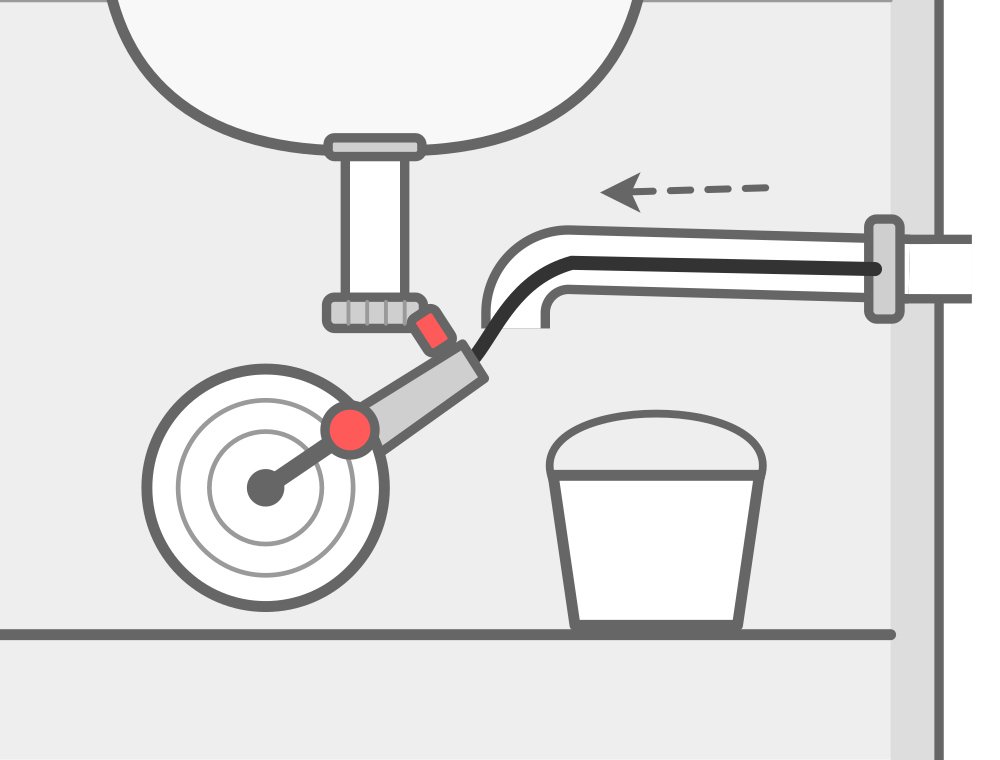
Hand auger · 4 of 5
When it breaks through, keep turning clockwise and draw the cable back out. Wipe it with a rag as it comes.
-
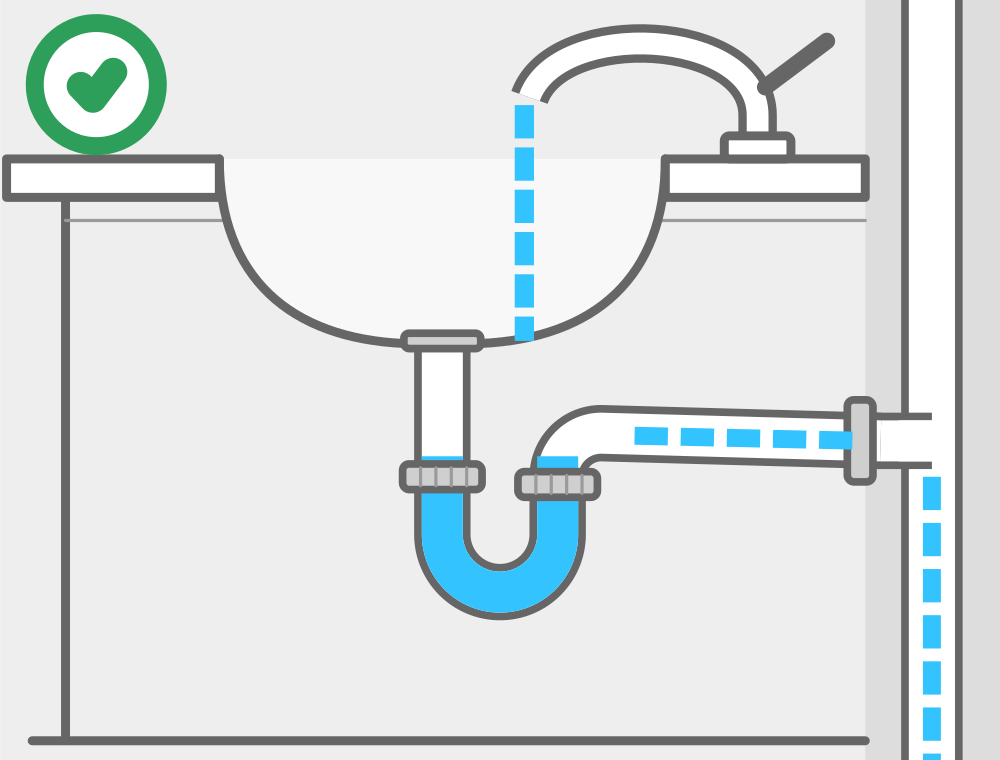
Hand auger · 5 of 5
Refit the trap, hand tight, and run hot tap water for a couple of minutes. Check the joints are dry.
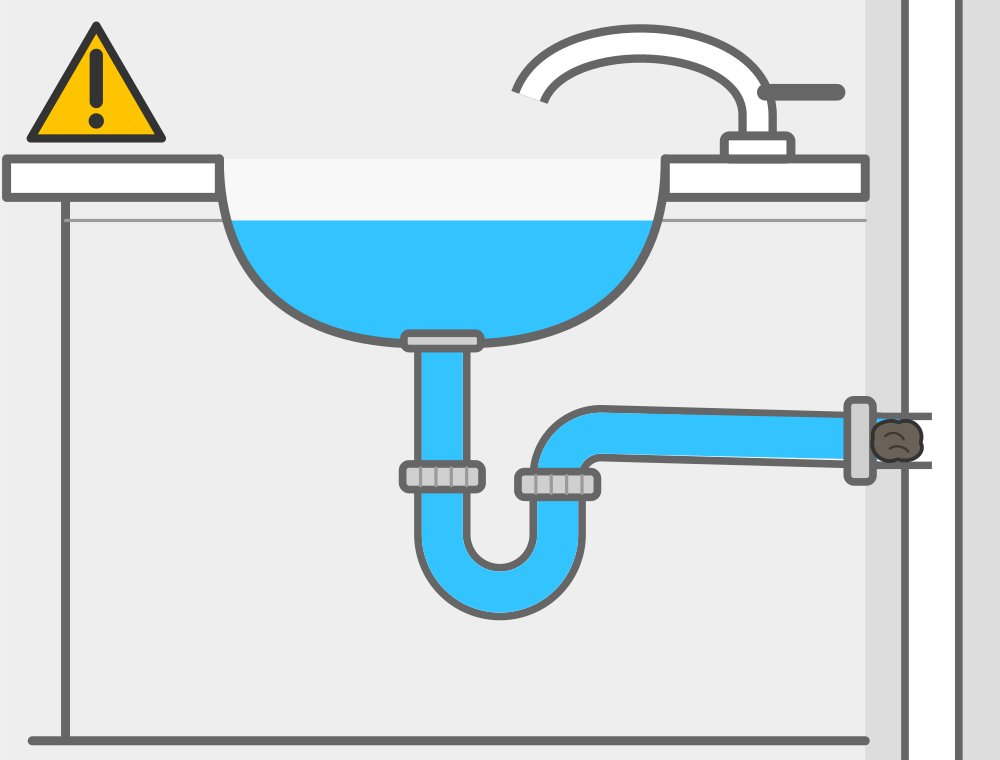
Step 9 · Final check
Still clogged? Unclog.it.
If the trap is clean and the hand auger didn't clear it, the blockage is further along than you can reach, or the pipe is coated end to end. That's a job for a licensed plumber with a drain machine.
A plumber clears a sink from $329 in regular hours (9 to 5, Monday to Friday). After hours, prices double.
Metro Vancouver and the Fraser Valley, British Columbia
Before you keep going
One drain, or the main line?
Everything on this page works on one sink's own drain. These signs point to the main line instead:
- More than one drain is slow or backed up
- Water rises in a tub, shower or floor drain when you run a tap or flush
- The lowest drain in the home is the one affected, or you can smell sewage
- Other drains gurgle when this sink empties
That's a different job, and nothing you do under the sink will fix it. In Metro Vancouver and the Fraser Valley, Unclog.it clears a main sewer line from $769 in regular hours.
Why the steps go in this order
Inside the sink.
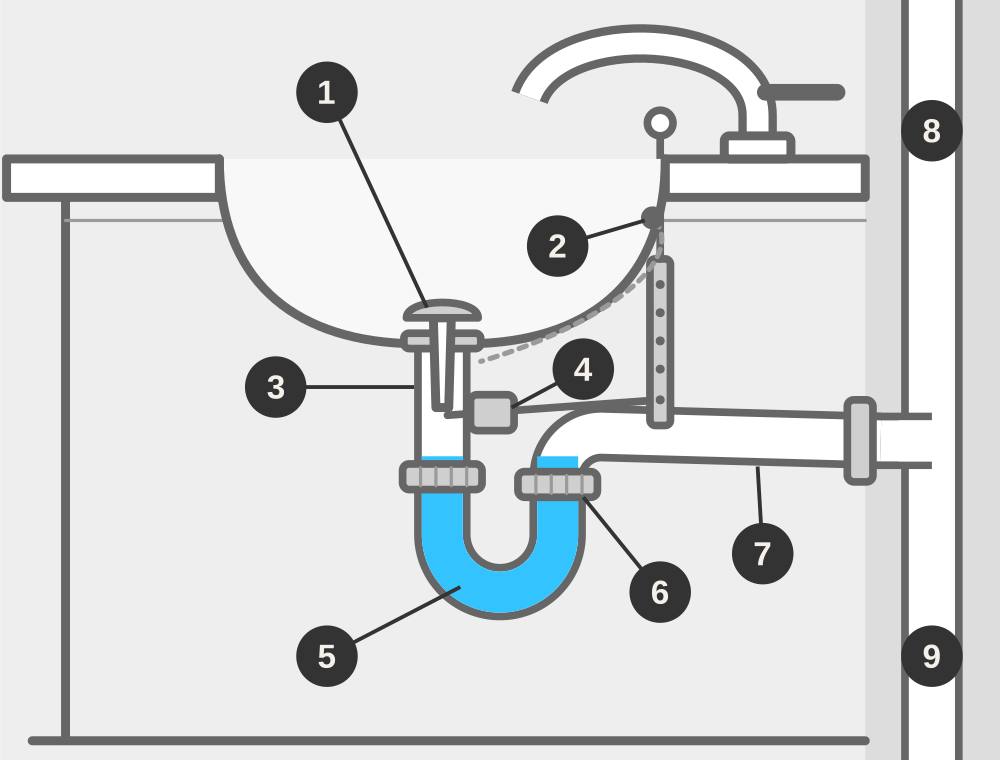
Water leaves the bowl, drops through a short pipe, goes around a bend that always holds water, and runs along a nearly level pipe into the wall. Clogs sit at the stopper, in the bend, or in that level pipe, and the steps check them in that order.
- Stopper. Bathroom sinks. Hair wraps around its stem. Kitchen sinks have a basket strainer here instead.
- Overflow. The hole near the top of a bathroom bowl. Block it before you plunge.
- Tailpiece. The straight pipe down from the drain.
- Pivot rod and nut. The rod that lifts the stopper. Undo the nut by hand to free it.
- Trap. The bend. The water in it keeps sewer gas out of the room.
- Slip nuts. Two of them hold the trap. Hand tight.
- Trap arm. The pipe into the wall. Most kitchen clogs are in this pipe or just past it.
- Vent. Runs up through the roof and lets air in so the drain flows.
- Drain. Carries on down to the main line. A blockage here is not a sink clog.
Which tool for which clog.
| Tool | Best for | Watch out for |
|---|---|---|
| Plastic drain strip | Hair in a bathroom sink | Pull it up slowly so the barbs keep hold |
| Flat cup plunger | A soft clog in or near the trap | Seal the overflow or the other bowl first |
| Your hands and a bucket | Anything in the trap | Old metal traps can crumble |
| Hand auger, 1/4-inch cable | A clog in the pipe in the wall | Never force it. The cable kinks. |
| Toilet auger | Toilets only | Wrong tool for a sink |
| Chemical drain cleaner | Nothing we would use it on | Caustic water in the bowl and the trap |
What to buy
A flat cup plunger and a plastic drain strip. The plunger is the plain rubber cup with no sleeve on the bottom. Keep one for sinks only. The strip is a long barbed piece of plastic, sold beside the plungers.
A hand auger. A small drum with a 1/4-inch cable, about 25 feet long, and a thumbscrew to lock it. That reaches as far as a homeowner should go.
No links and nothing to sell. Buy them wherever is closest.
More help and questions.
Short answers from a plumber. Tap a question to open it.
Will boiling water unclog a sink?
Not a full blockage. It cools in the bowl without clearing anything, and boiling water can soften plastic pipe and crack a porcelain sink. Hot tap water is fine for flushing a drain that is already flowing.
Do baking soda and vinegar work?
They are harmless and fine for a smell. The fizz does not make pressure, and it will not move a real blockage.
Is chemical drain cleaner safe for a sink?
It rarely clears a sink that is fully blocked, and it leaves caustic water standing in the bowl and the trap. If you have used it, do not plunge and do not open the trap, and tell the plumber before they start.
Why is water coming up in the other side of my double sink?
The blockage is in the shared pipe after the two drains join, so water from one bowl comes up the other. Seal one drain with a wet cloth and plunge the other, then clean the trap.
Can I use a toilet plunger on a sink?
A flat cup plunger seals on a sink. A toilet plunger has a sleeve on the bottom that stops it sitting flat, and one that has been in a toilet does not belong in a kitchen.
When should I call a plumber?
When the trap is clean and the sink still won't drain, when water comes up in the sink while you aren't using it, when another drain backs up at the same time, or when the pipes under the sink are corroded or leaking.
Why not a wire coat hanger?
It scratches the sink, it is too stiff to get around the trap, and it usually pushes the clog further in. A plastic drain strip costs a few dollars and is made for the job.
Can I use a wet and dry vacuum?
On a bathroom sink it sometimes works. Set it to wet, seal the hose over the drain with a wet cloth, block the overflow and let it pull. Never do this if drain cleaner has been used.
How do I stop it happening again?
- Kitchen: wipe greasy pans with paper towel and put it in the green bin. Use a strainer.
- Bathroom: pull and clean the stopper every month or two.
- Both: run hot tap water for a few seconds after use.
More sink help
One question, one page.
Meet the author
Andrew Henderson, Red Seal Plumber
Andrew has been clearing drains in Metro Vancouver and the Fraser Valley for more than 15 years. He founded Pure Mechanical Group, the company behind Unclog.it, and contributed to the Red Seal Occupational Standard, the national standard plumbing apprentices train to. He also wrote the toilet version of this guide.
Legal disclaimer
The information on this site is provided for general educational purposes only and does not constitute professional advice. Plumbing work can cause property damage or personal injury if performed incorrectly. Proceed at your own risk. Always follow local codes and manufacturer instructions. If you are unsure at any time, stop and contact a licensed professional plumber.
Unclog.it and Pure Mechanical Group Ltd. make no warranties or guarantees and expressly disclaim liability for any loss, damage, or injury arising from the use of this content. By using this site you agree to these terms.